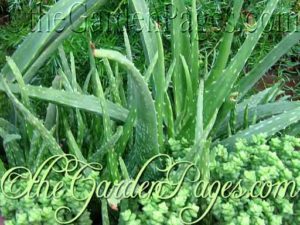
Aloes have bright green stalks that grow up to 1 foot long and up to 2 inches thick They usually have creamy white stripes or dots along the leaves. These succulents are easy to care for indoors or in mild-winter gardens. It is a drought tolerant succulent plant which grows well in dry shade to part sun.
Aloe vera plants grow upright and spread with time by creating clumping offsets. Perennial aloe produces dramatic, bright orange flowers on long stalks in the spring and summer.
Aloe Vera is sometimes called the healing plant. Used medicinally aloe vera gel is beneficial for burns, minor cuts, scrapes, insect bites and other skin irritations.
Water-wise aloe vera is great for xeriscaping in dry gardens with other succulents and cacti. They don’t mind heat as long as they don’t get too much sun. Aloe does best in light or dappled shade on the porch or on the windowsill in the kitchen. Aloe is even reliable in dry shade. One to two hours of direct sun is plenty.
Dark brown or orange spots on the leaves is a sign of sunburn. Spots can sometimes by crusty or flaky. Sometimes the entire stalk turns orange. Indoors, aloe prefer bright, indirect sunlight. If they are getting sun in a window, keep an eye on them for brown spots. You can either move the plant further away from the window, or give it a screen to add a bit of shade.
Aloe vera is easy to care for and usually only needs water once a month or when the stalks become shriveled. Planted in the ground, it can tolerate more drought and will grow slightly larger.
Aloe plants are cold hardy to about 45 degrees. Mine have survived a light dusting of frost, but they have overhead protection. I wouldn’t leave them outdoor in the open if Jack Frost visits your area frequently. Dark, shriveled stalks are a sign of frost damage on these succulent plants.
Indoors, aloe vera plants are suited to the hot dry conditions of the average home and make excellent houseplants. They will tolerate a few hours of sun a day, but should be fine anywhere with lots of bright, indirect sunlight.
Share the Aloe Love
Aloe vera plants form offset pups and will eventually become a clump of plants. It is easy to tease out the small plants. They will have their own roots and be ready to plant and start growing immediately.
My plant started out in a small 4″ pot from the nursery. Normally, you should repot plants in a slightly larger pot. But I planted my aloe in a huge 12″ container, knowing it would fill in. Who has time to repot their plants all the time? They are easy to pull away from the mother plant, so you can give them to friends or spread them around the garden.
To keep the pot from looking empty while the aloe plant was filling in, I planted a small trailing succulent around the edges called Rosary Plant. The two have similar cultivation needs, so they get along great and look terrific.
After the first year, my aloe created lots of offsets and filled in the pot nicely. The new shoots are easy to tease out from the main plant so I can repot them or give them to friends.
Aloe vera cuttings are also easy to root
Fresh cuttings need to scar over so the wet cut will get a thin film over it. Usually this will only take a few hours, but you can actually wait days before your cutting must be planted.
Put at least 1/3 of the cutting under the ground. Either use a cactus soil mix or make your own by mixing in sharp sand or vermiculite to help the soil drain quickly. Keep the soil moist for the first few weeks while your aloe transplant develops roots.
The newly planted stalk may shrivel while it lives off the stored energy, this is normal. Resist the temptation to over-water. Like all succulent plants and cacti, aloe vera will rot if it sits in a wet pot.
Aloe Vera Gel for Skin Care
Aloe vera is famous for its healing benefits and is commonly grown in kitchen gardens to help with minor burns and other skin problems. To use aloe, work with one inch chunks cut from the tips of the leaves. Peel off the spines on the edge of the stalk and cut open the chunk. Squeeze out the aloe juice and pulp onto sunburns or other skin irritations.
Spread it around with your fingers or the aloe peel. It will feel cold on sunburned skin. As it dries, the juice may feel sticky at first, but will eventually dry out, leaving a slight green tint (relax, it comes off). Apply 1 – 2 times a day to cool off burns and help heal skin.
I was amazed at how well it worked on my baby’s diaper rash when nothing else helped. First, I’d slather the skin with aloe gel, then put the remaining pulp into his diaper and wrap it all up.
Make sure you have removed all of the outer skin first!
Usually the rash was cleared up in a few hours. Fresh is best, studies suggest aloe starts to loose its properties within an hour of picking.
Healing aloe vera is an easy to grow plant indoors or out, with outstanding health benefits and makes a great addition to any garden.