Care and Growth of Bay Laurel, Grecian Laurel or Laurus Nobilis
Bay laurel, or laurus nobilis is a drought tolerant perennial tree native to the Mediterranean region. The fragrant, leathery leaves are dried for use as a cooking herb and in the pantry.
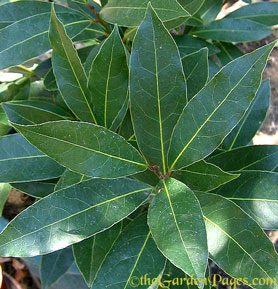
Other names for this aromatic plant with deep green leaves are Sweet Bay, Grecian Laurel or Roman Laurel. Bay leaves can be added to spaghetti sauces, stews or soups for flavor.
Mature Grecian Laurel trees flower in clusters of white to yellow blooms which turn into small berries. Bay leaves are dark green and up to 4 inches long and 2 inches across.
Sweet bay can grow into a tree 40 feet tall. Bay can tolerate low water in the garden and poor soils. They like full sun to part shade although in hot areas they benefit from a bit of shade during the hottest part of the day. They are hardy to about 20 degrees, or USDA Zones 8 – 10.
Perfect for low water landscapes, these are compact plants which grow slowly. Generally, bay doesn’t need pruning thanks to its compact growth habit, but they tolerate being trimmed and shaped into hedges. Perhaps as a result of their insecticidal properties, bay trees are generally not bothered by pests.
This is also the bay leaf used in the kitchen. Bay leaves can be used fresh from the garden, but their flavor is a bit different. Dried bay leaves are added to spaghetti and other sauces, soups and stews. They add extra flavor, but are not meant to be eaten with your dish.
Bay leaves also have insecticidal properties
They are kept in kitchen cabinets to protect grains from moths and other pests. My mother always kept a bay leaf in the flour bin to keep flour beetles from hatching, now science has proven this belief to be true. Harvest older leaves for use in the kitchen. To keep them from curling press them between paper towels under a heavy book or board,
Bay Laurel is also known as a magical plant in mythology
It is associated with victory, strength and protection. Conquering heroes wore laurel wreaths upon returning to Rome in victory. A crown of bay is worn by Apollo the Greek god of the sun, and it is known as one of his emblems.
When consulting the Oracle at Delphi the priestesses of Apollo held a bay leaf under their tongue to help induce their trances. It has been used to banish poltergeists, bad luck and to break evil spells. The sudden withering of a bay tree was said to be a bad omen for its’ owner.
Another similar fragrant tree is called California Bay, Oregon Myrtle, or Umbellularia Californica. These shrubs are native to California and the US southwest. They can grows to 20 feet tall, or taller with more water. California Bay should be used carefully in the garden as it has been identified as a host plant for spores carrying Sudden Oak Death.
Buy only from reputable nurseries and California Bay should probably not be used outdoors as an insecticide. Their leaves are much more fragrant and more bitter.
It can be used in cooking but in much smaller proportions. Use in moderation; California Bay is also called Headache Tree. The almond sized nuts can also be roasted and eaten.
Sweet Bay Laurel is a classic container plant
Bay is often depicted at the entrances to ancient temples. Grow one in a pot on your doorstep for a touch of elegance.
Start with a container at least 12 inches across or larger, if there are no drainage holes you must let the soil dry out before watering again. Grecian bay can be clipped into topiaries or standards and it is always fine to pinch a few leaves for the pantry.