Opuntia ficus-indica Prickly Pear Cactus
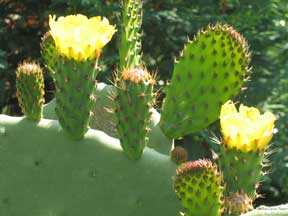
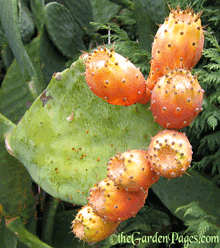
In spring Prickly Pear cactus gets stunning bright yellow flowers which turn into red prickly pears. They are edible – and delicious!
Cactus pears have the texture of watermelon and a mild pear taste. They are high in fiber too. The seeds are black and about the size of a pea.
You can also eat the pads; raw in salads or salsa or cooked. Prickly pears grow up to 12 feet tall and as wide. Most opuntia varieties are cold hardy to 30 degrees below 0.
The cactus pads do not have prominent thorns. The thorns are small, hair like and not something you want in your skin! I recommend using tongs to handle them, or leather gloves or all of the above. I’ve also seen cardboard recommended.
Cacti were commonly planted around the California missions and other early structures. They were used as a source of food, fibers and as barriers.
My cactus came from a cutting my neighbor threw over the fence for me because the pears were so good. I let it root where it fell on the ground – without planting. This is year five for the rooted plant and I need to cut it back before it takes over the yard.
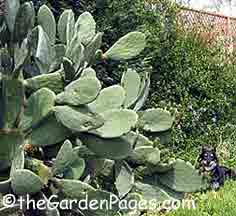
Outdoors, prickly pears look especially good in silhouette against a sunset. They also make very effective security barriers. They can take regular pruning to maintain shape. Always cut at the joints, where the two pads meet. Cuttings can easily be rooted by burying part of a pad in moist, well drained soil. Opuntia species have also been known to take root where pads have fallen on the ground.
Indoors, Opuntia cactus can be grown in pots but they generally don’t grow to more than a few feet tall. They do best in full sunlight with very little water. No cacti like to be over watered and they will rot if they remain in saturated soil. Water sparingly and improve soil drainage in areas that receive a lot of rain. My cactus lets me know when it needs water with thin pads and droopy tips. One year we got over 20 inches of rain and the pads swelled up with so much moisture they broke off under their own weight.
How to Grow and Eat Prickly Pear Cactus and Harvest Prickly Pears
Prickly pear cactus (Opuntia ficus-indica) are useful in the landscape for dramatic impact, adding a southwestern feel to any landscape. Opuntia cactus also have edible pads and provide the red cactus pears of commerce. This cactus variety grows wild in the southwestern United States and Mexico. Prickly pear cactus have deep green branching pads, grow up to 15 feet tall and as wide around in as little as 5 years. The oval (edible) pads can be up to three feet long and over a foot across.
In spring Opuntia ficus-indica gets stunning bright yellow to orange flowers measuring 3 to 5 inches across. These turn into pinkish red, edible prickly pears. Over time these cacti form brown, woody trunks.
Most optuna varieties are not fussy about soil conditions, are cold hardy to 30 degrees below zero and many also have edible pears and pads. Cattle are also known to have a taste for cactus and in some parts of the world it is used as feed.
The cactus pads do not have prominent thorns. Instead, they have clumps of small, hair-like needles. It is very easy to get the needles painfully lodged in your skin just by brushing against the pads. Usually the only way to get them out is with tweezers and a magnifying glass.
It is recommend to use tongs, a large fork, or cardboard to handle any part of cactus. You should also wear leather gloves or two layers of cotton gloves. The gloves will need to be checked for thorns though, so you may want to avoid handling cacti using your hands.
When ripe, cactus pear color can range from deep red to orange. Cactus pears have the texture of watermelon and a mild, sweet taste like pears or banana. They are high in fiber too. The seeds are black and about the size of a pea. You can also eat the pads raw or cooked. Young, bright green cactus pads are best for eating. Thorns should be washed or scraped off before the thick skin is peeled.
Prickly pear cactus are not only beautiful, but a useful addition to any drought tolerant landscape.