Rosary Plant is a unique little succulent plant that grows close to the ground and is great for hanging baskets.
Rosary Plants grow into mounds 6 to 10 inches high. The leaves are just barely 1/4” long and arranged neatly along the stem to give it a square look. The base of the plant’s stems take on a stiffer feel and woody look with age.
Crassula rupestris can take part shade to full sun. Extra sun seems to give a red tinge to the edges of their leaves. These trailing plants get pale pink flower clusters in late summer and winter.
These, like my other crassulas, take monthly watering in my hot, dry southern California garden. If you are growing your Rosary Plants in direct sun, they may appreciate a bit more water, especially during the summer.
Crassula rupestris is also called Baby Necklace or Tom Thumb. They are member os the large and diverse Crassulaceae family. The tiny leaves on this succulent plant are arranged neatly along the stem giving it the appearance of beads on a string or a stack of buttons. Although much smaller, crassula rupestris looks similar to Chinese Pagoda (crassula perforata).
They grow close to the ground and slowly form mounds from 6 to 10 inches high. In hanging baskets they drip over the sides like a vine with the tips pointing up.
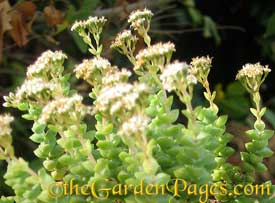
Crassula rupestris gets pale pink clusters of tiny flowers with 5 petals from early spring through summer.
The attractive blossoms form on the ends of the stems and seem large in proportion to the tiny plant.
Like most plants in the crassulaceae family, crassula rupestris grows best in warm winter areas (USDA Zones 9b – 11). They can take full, open shade to full sun but seem to do best in partial shade. Extra sun changes the leaves to a yellowish lime color with a red tinge to the edges.
Rosary Vine is a drought tolerant plant suited to dry landscapes. They take monthly watering in my hot southern California garden. If you are growing them in direct sun, they may appreciate a bit more water during the heat of summer.
All succulent plants are sensitive to cold weather. Outdoors these plants will need overhead protection from frost and should be brought indoors or covered if temperatures drop below freezing.
Rosary Plants in Containers
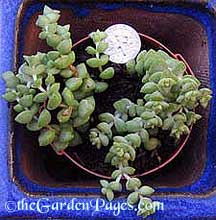
Rosary Plants are perfect for a windowsill or the patio table where you can admire their unique charm. They are great to mix and match with other succulents or cacti with similar growing requirements.
Use them to fill in the bare spots in your containers or rock gardens. Try trailing Baby Necklace with Aloe Vera or an upright crassula like Jade Plant (crassula ovata).
Repotting and Propagating Rosary Plants
Older Rosary Plants can start to look leggy and bare at the bottom of their stems. This is the perfect time to trim them and create more plants.
Propagation of crassula rupestris is easiest by rooting their stem cuttings. Bury the woody part of the branch in the soil and keep them slightly moist for the first few weeks.
My cuttings seem to need a few years to get growing before they begin flowering. Seeds from crassula rupestris are very tiny and are carried by the wind like powder.
Thanks to their slow growing habit and small size Rosary Plants work well in dish gardens or succulent plant wreaths.
It is easy to become enchanted by Baby Necklace no matter where you grow them or by what name you call them.