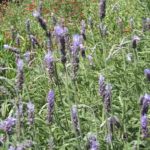
Lavender (lavandula) plants are small shrubs native to the warm, dry Mediterranean region. They are perfect for drought tolerant gardens and provide wonderful fragrant and pretty lavender purple flowers almost all year.
French lavender (Lavandula dentata) blooms all year and is drought tolerant.
These dependable plants can takes full sun to partial shade. They can take moderate water in the garden, but can also survive on less water once established (usually after a year).
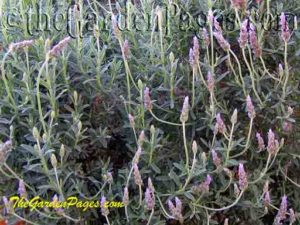
Mature lavender plants can grow from 3 to 4 tall and 4 to 6 feet wide with narrow green or gray green leaves. They are great in rock gardens, herb gardens or as low, informal hedges. They add structure to gardens with their evergreen leaves.
The entire plant is strongly fragrant and the leaves can be sticky with essential oils.
The purple flowers bloom on long thin, squarish stalks and the buds can be 1 to 1 1/2″ long. The flowers are great in fresh bouquets or dried for arrangements.
Trimming Your Lavender Plants
After the second year or so, your lavender plants can develop a dry thatch, or collection of dry leafs on the inside of the shrub. The plant can also become leggy, meaning it has long spindly branches.
This means it is time to cut back your plants. Fall is usually the best time to do this, especially in mild winter areas. Cut the branches way back; to about 10 inches long. The next spring your lavender will grow back thick and fresh.
If you cannot stand the ‘twig’ look this creates, you can trim back during the year. I will cut back a few branches to 10 inches here and there. By the end of the season some of the cut branches will be leafing out, giving you a little bit of green. It is much more labor intensive this way, but it may be worth the trouble if you have just a few herb plants.
More Lavender Facts:
The dried blooms make excellent potpourri and can be used to freshen linen closets and drawers.
Lavender is a great insect repellent. The branches are highly fragrant and I like to tuck them into my woodpile to keep out bugs.
Lavender has been used in love potions for centuries. It is also worn to magically attract love and elevate mood.