Growing Drought-Tolerant Succulents and Cacti
Table of Contents
Hot, dry, Southern California summers, dry winds, baking heat, little rainfall, heavy clay alkaline soil. No time to fuss over prissy plants. Yes, that’s my garden. So, I needed plants that liked the climate — and their solitude.
Succulents (and cacti) love heat and sun, need very little water and always look green and lovely. Small succulent plants are nice for container gardens indoors, on the patio or as ground cover. The big succulent plants like jade (crassula ovata) are great flowering shrubs for landscape elements and also look extravagant in big pots.
I like a plant that does something; has an interesting shape, or great color. How about a plant that changes color? That’s why I love succulents. Here are a few of the plants I’m growing in the arid southwestern US and tips on how to grow and care for succulent plants.
Aeonium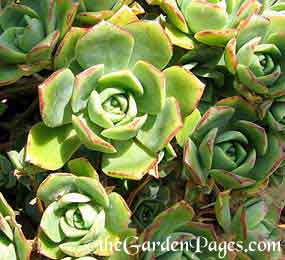 Aeonium like many other succulent plants are sometimes called Hens and Chicks. They form green rosettes on the end of stalks, followed by lots of little ‘chicks’. The green rosettes have red edging and a hint of cream in the middle. The leaves generally measure 1 – 2 inches across. The creamy centers seem more pronounced in winter. These tough succulent plants slowly form one foot clumps with aerial roots dangling down to the soil. When these pretty succulents bloom, they form tall stalks with small yellow flowers. Aeonium plants are easily propagated by cutting off a stalk and replanting the top sprig. The whole sprig can be put in the ground as is, or you can break up the leaves and spread them around. I have also seen these plants are listed as Aeonium haworthii or Pinwheel in The Complete Book of Cactus and Succulents. Personally, I think it behaves and looks much more like an echeveria, but I’m not an expert, just an admirer! |
Aloe Vera
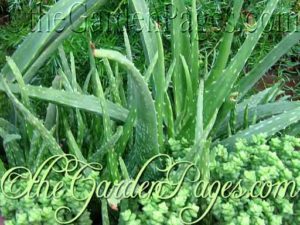
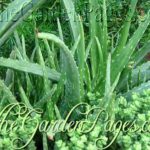
Perennial Aloe gets bright orange flowers on long stalks in the spring and summer. A few hours of sun each day is plenty, it does best in light or dappled shade. Dark brown or orange spots on the leaves is a sign of sunburn. They need water about once a month, or when the stalks look shriveled. Aloe is famous for its healing properties. Peel the skin and rub the pulp on sunburns or other skin irritations. For more info Visit theGardenPages Aloe Vera Page… |
Crassula Capitella
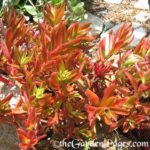
These crassula succulent plants can take full sun to light shade, love heat and are easy to root and grow. They will change color depending on the amount of sunlight they get. The leaves on this succulent can either appear as bright apple green or flaming red. They are drought tolerant and only want light watering. They can take frost for a few hours, but not a hard freeze. Crassula capitella spread by runners and will eventually form a mat about 6 – 8 inches tall, like ice plant. Plants form roots at their joints even before they touch the ground. They’re great for hanging baskets! |
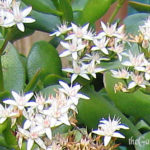
Crassula Ovata – Jade Plant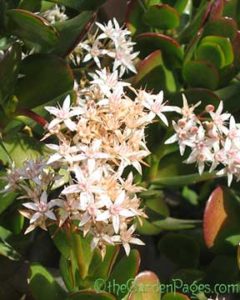 Crassula ovata or Jade plants are shrubby succulent plants that make excellent choices for dry gardens and houseplants. Jades have thick, deep green leaves sometimes tinged with red on the edges. The leaf shape, like the name ovata implies, are oval from 1 – 2 inches long. Crassula ovata develop thick, fat trunks that have an aged look and will eventually grow up to 8 feet tall. In late winter jade plants get 3 inch clusters of light pink to pale salmon flowers with five petals. These perennial plants are drought tolerant and only need water once a month or so. For jade plant care and photos drop by my new Jade Plant page… |
Crassula Portulacea – Spoon Jade
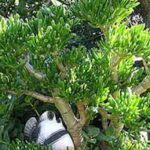
Crassula portulacea is drought tolerant and only wants a light watering. Let the soil dry out between watering to avoid rot. Every year mine are able to take a light frost for a few hours. I’d give them overhead protection in winter. I’ve got a little corner of the garden that I’d like to look like an underwater grotto – except without the water. Here in Los Angeles we don’t get a lot of rain, so I’m planting it with succulents. These add a dramatic touch and look like some sort of sea plant or coral to me. -And the ceramic fish likes hiding in them. For more crassula portulacea care info visit theGardenPages Spoon Jade page… |
Crassula Rupestris – Rosary Plant
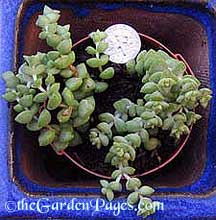
These, like my other crassulas, take monthly watering in my hot, dry southern California garden. If you are growing your Rosary Plants in direct sun, they may appreciate a bit more water, especially during the summer. Crassula rupestris are unique and interesting little plants. They’re perfect for a windowsill garden or the patio table where you can admire them. They are great to mix and match with other succulents or cacti. They fill in the bare spots and hang over the edge of pots for an extravagant feel. Visit my new Rosary Plant page for more info … |
Crassula Tetragona or Bonsai Pine Tree
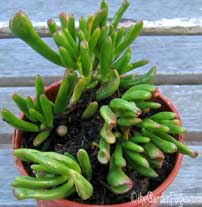
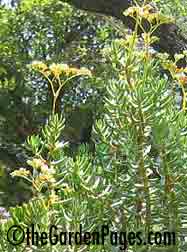
This is Crassula tetragona. It grows up to 4 feet tall in the ground, but stays much shorter in a pot. -It is used in bonsai to look like pine trees. They will branch at the tips. In summer they get white to yellow sprays of flowers that make me think of Queen Anne’s Lace. These crassula can take full sun to light shade, love heat and are easy to root and grow. They are drought tolerant and only want water once a month or so. Let the soil dry out between watering. They can take frost for a few hours, but not a hard freeze. Mine are growing in full sun and shade, in heavy alkaline, clay soil. Their color ranges from pine green to a deep bluish green. They get watered once a month if I remember. They’re pretty, carefree and always look green when everything else has fried. Visit my Crassula tetragona page for more photos and info… |
Haworthia Correcta – Window Plant
The plants seem to glow from the inside when the sun hits them just right. The tips of their leaves are translucent, like windows looking into the green jelly inside. I took this photo in winter when they were all fat and happy from extra rainfall. Care of Haworthia plants is slightly different from most succulents in that they appreciate more shade and even more water than their drought tolerant cousins. Visit my Haworthia Page for more info… |
Opuntia – Prickly Pear Cactus
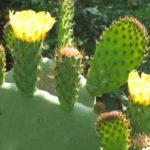
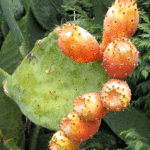
Cactus pears have the texture of watermelon and a mild pear taste. They are high in fiber too. The seeds are black and about the size of a pea. You can also eat the pads; raw in salads or salsa or cooked. Prickly pears grow up to 12 feet tall and as wide. Most opuntia varieties are cold hardy to 30 degrees below 0. My cactus came from a cutting my neighbor threw over the fence for me because the pears were so good. I let it root where it fell on the ground – without planting. This is year five for the rooted plant and I need to cut it back before it takes over the yard. Find out how to harvest prickly pears on the Cactus Page… |
Portulacaria Afra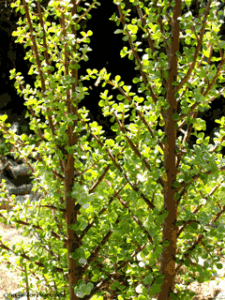 This succulent plant is sometimes called Baby Jade or Elephant Food. It has small round leaves and thin branches like a miniature jade plant. The bright green leaves make a nice contrast to the dark brown stems. Some portulacaria varieties are variegated, meaning they have white or red stripes on the leaves. In container gardens they can used for bonsai to look like trees. In the ground Elephant Food will quickly grow to 4 – 5 feet tall and make nice informal screens or hedges. Visit my Portulacaria Page for more info and photos…. |
More Succulent Plant Pages
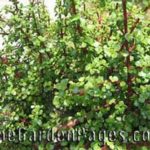
Growing Portulacaria Afra Succulent Plants

How To Root Succulent Plants With Cuttings
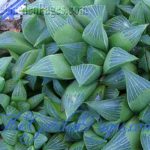
Haworthia Correcta Window Plant
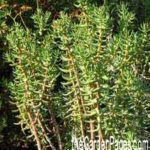
Crassula Tetragona or Bonsai Pine Succulent Plants
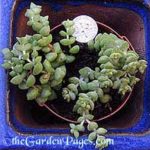
Growing Crassula Rupestris or Rosary Plants
Spoon Jade or Gollum Jade Crassula Portulacea Care
Crassula Ovata or Jade Succulent Plant Care
Color Change Crassula Capitella Succulent Plant Care
Growing Edible Prickly Pear Cactus
Growing Healing Aloe Vera Plants