How To Root Succulent Plants With Leaf or Stem Cuttings
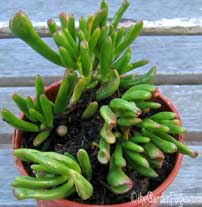 Succulent plants are perfect for hot, dry landscapes or container gardens and are easy to root and grow. Once you learn how easy it is to propagate succulent plants, it’s a great way to expand your plant collection – and it’s free!
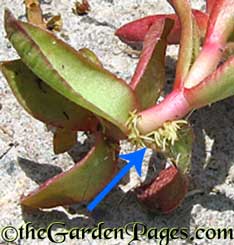
This photo shows tiny roots forming on the stem of a crassula succulent plant. They look like cream colored hairs, most often formed at a joint in the stem.
You can use this simple planting technique with succulent plants from the Crassula family like Jade (C. ovata), Spoon Jade or Gollum Fingers (C. Portulacea), Rosary Plant (C. Rupestris), and Crassula tetragona.
This propagation technique also works on other cactus and succulent plants like Aloe Vera, Echeveria, Aeonium and Baby Jade (Portulacaria afra). It also works with other fleshy plants like geraniums.
Rooting Succulent Plant Cuttings
Start with a cutting about 4 – 6 inches long if possible. Bury about half the stalk in soil. This will give you deep roots and helps the plant withstand drought better. Trim off the last few leaves to make a bare stalk if you need to.
If you don’t have a stalk, the leaves can be planted too; bury about half the leaf, cut side down. Most succulent plants and shrubs will form roots on the joints in their stalks.
Cacti are also simple to root by burying part of a cactus pad in soil. Or, leave it touching the ground (which is what I did because they’re prickly!). You can cut a cactus pad in two (or three) to create more plants. If the pad has a very wide cut, exposing a lot of flesh (say, two or three square inches), let the cutting sit for a day. The cut will form a thin film over the surface that will protect the cutting while it is rooting.
Watering Leaf or Stem Cuttings
Water every 2-3 days so the soil is moist (like a squeezed sponge). After a month, cut back to monthly watering. The leaves will probably shrivel a bit as the plant forms roots. The plant is living off the stored energy in its leaves. This is normal. You may also lose a few leaves, which is also normal. Do not use this as an excuse to over water!
Save all your broken parts and leaves. When I am repotting, I always save all my bits and pieces. Tuck them into the soil and leave a little green sticking out. Most parts will take root and grow into an extra plant.
How to Grow Succulent Plants
Succulent plants want heat and light. Outdoors most succulents take full sun to light shade. Some succulents will change colors in the sun and with the seasons. If you see brown, scabby spots, plants are getting too much sun. Aloe plants will turn orange in full sun.
Most succulents and cacti make excellent houseplants. They are already accustomed to a warm, dry environment, but they do need bright light. Indoors, most succulent plants can take sun near a window, or bright light. As a general rule of thumb, if there is enough sunlight for you to read, there is probably enough sun to make your plant happy.
Outdoors, Aloe and Haworthia like bright light, but take less sunlight than most succulents. One or two hours of direct sun is usually their limit. They will turn orange if they are getting too much sun. Moving them to more shade will change them back to green.
A very light frost is usually no problem for succulent plants. A hard freeze, however, will freeze them solid. Outdoors, they can survive a frost if they have overhead protection. In freezing winter areas, bring you plants inside and put them in an area with lots of light.
How to Water Your Succulent Plants and Cacti
Succulents are native to places like South Africa, South America and the arid Southwest. Try to keep that in mind when you are picking a spot for your plants.
Succulents and cacti are equipped to store water in their leafs and stalks so that they can survive long periods of drought. Indoors, drench the pot and then allow the soil to dry out between waterings.
Outdoors, water succulents and cacti a few times during the hottest days of summer (if they look shriveled), otherwise, leave them alone. The fastest way to kill succulents is to over water them.
Soil Requirements for Succulents and Cacti
Succulent plants in a pot: The preferred soil for succulents is light and fast draining. Some retailers carry a special fast draining cactus potting soil, which is ideal. However, regular potting soil can also be used. Just remember that regular potting soil is formulated to retain water, so be sure to let it dry between watering (after your plants are established.) Do not use the potting soil with added fertilizer as it can be too ‘rich’ for succulents.
If available, add a scoop of sharp sand or fine gravel to assist with drainage. If you are planning on eventually transplanting your cuttings into your garden, try adding a scoop of your own garden soil to the planting mix. This way your plant will already be used to your soil.
Rooting Succulent Plant Cuttings Outdoors
Generally you can put your succulent plant cutting directly in the soil in the exact spot where you want the plant to grow. Just break up the soil, (add a little potting soil if you must), and plant your cutting.
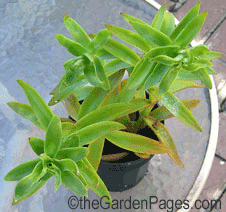 If the area is in full sun, your plant cutting will have an easier time rooting and getting established if you give it a little shade for a couple weeks or so. You can use a shade cloth, a piece of cardboard or anything else that keeps the sun off your cutting for a few hours during the day.
If you are rooting a succulent cutting in a pot but plan on planting it in your garden, I recommend using mainly soil from your own garden in the pot. You can add a scoop of potting soil if you wish, but the best thing is to get your cutting used to your native soil off the bat. Your plant will have a better transition from pot to garden soil when you plant it.
Good luck and happy gardening!