Pomegranates are good choices for drought tolerant gardens. They can take regular garden watering, but will grow in drought conditions once established.
These deciduous trees can grow up to 20 feet tall and across, forming a large round shrub. They can also be trimmed and formed into multi-trunk trees.
Some ornamental pomegranate varieties are smaller, remaining under ten feet tall. Their leaves are slightly smaller and they still bear fruits about the size of a large golf ball.
Fall Color For Mild Climate Gardens
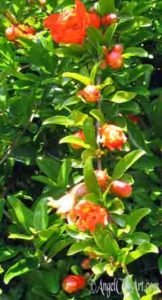
All pomegranates bloom in the spring and bear fruit in the fall. In autumn, pomegranate leaves turn shades of bright to deep, golden yellow and make a pretty picture against the bright red fruits. Add a little color to your fall garden by including one in your landscape.
One of my favorite things about pomegranates are the amazing flowers! The flowers are dramatic red to orange with flowers up to three inches in diameter. The photos here are of my tree, the flower color is vivid and bright. The orange blossoms seem to glow
A shrub covered with giant orange flowers can make a dramatic impact in your landscape. But the color can be overpowering. If they will be blooming the same time as other plants next to them, try mixing with colors like whites, yellows or blues.
As patio plants pomegranates are fine as long as you remember they will drop their leaves (and fruit) in fall, so don’t put them too close to the pool or other areas where litter would be an issue.
Pomegranate Fruit
The fruits can be up to six inches across and are orange to red, with a leathery skin, and juicy, pulpy seeds. The clear, dark red juice is sweet and tart at the same time. The seeds can be eaten whole or pressed for their juice. The juice is also notorious for stains, so don’t let Mom see you eating them in your good clothes!
The pomegranate is native to areas in northern India to Iran. They have become naturalized throughout the Mediterranean. Thanks to our similar climates, they are equally happy in western and Southern California gardens.
The pomegranate growing over my back fence is in heavy, clay alkaline soil and is happy with below average water. Here are photos of its beautiful bright glowing orange flowers in spring.
Pomegranate Fruit Pests
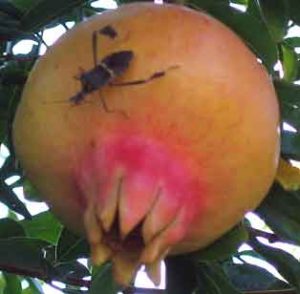
What is this bug?
How can I get rid of it?
This is the evil Leaf-Footed Plant Bug (Leptoglossus phyllopus). I’m starting this page to collect information about it, and how to get rid of it!
These pests can measure up to two inches long and can fly. This pest bores holes into the ripening pomegranate fruits. The fruits get brown spoiled spots on them and eventually fall to the ground in a pile of rotting fruit.
Last year when the pomegranates were all gone, they moved to my Navel Orange tree. The oranges seemed to develop thicker skins where the bugs tried to drill into them. I have not seen damage on the oranges – yet.
Natural Controls: The Texas Cooperative Extension reports that the Feather-legged fly (Trichopoda pennipes) is a natural enemy of Leaf bugs and their relative, stink bugs.
Share your pomegranate tips on a special blog entry I’ve set up on theGardenPages Blog!