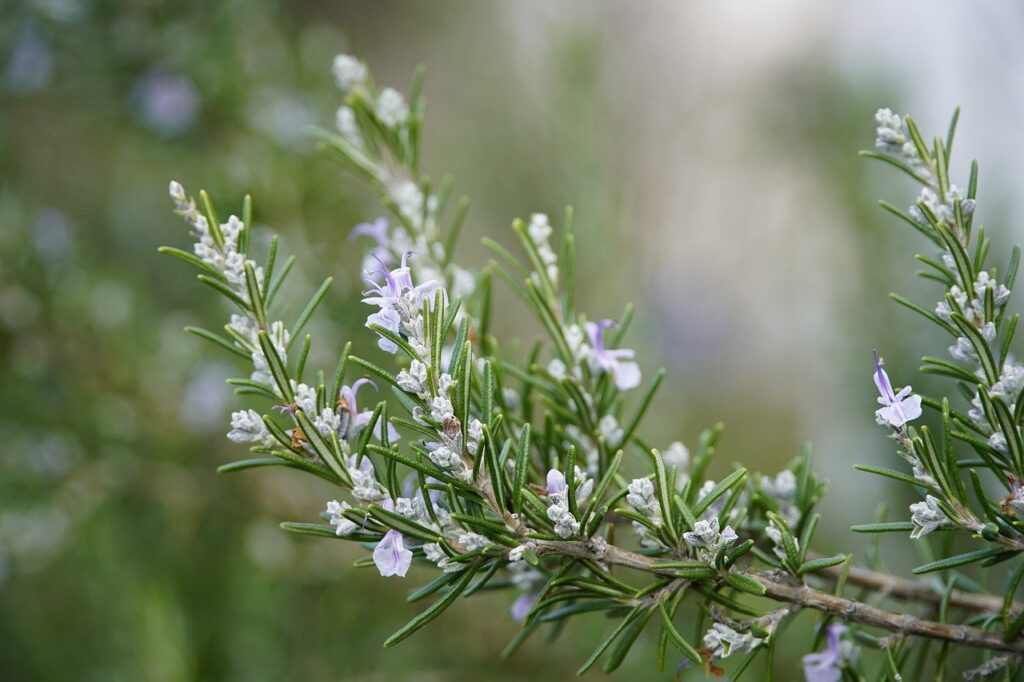
Rosemary (rosmarinus officinalis) is a perennial, evergreen shrub. Not only are they wonderful cooking herbs, they are also dependable plants to consider in any drought tolerant landscape. These small shrubs are native to the Mediterranean region which is known for mild winters, hot summers and generally low rainfall.
Rosemary has fragrant, sticky, pine needle-like leaves in deep green which grow on short stems. Flowers are deep blue to pale lavender and form along the tips of the plant. Mature branches are brown and have a thin papery covering that looks like peeling bark. These herbs grow slowly to six feet tall, but are generally seen much smaller when potted in containers. Plants likes full sun but can be grown in light shade, and can tolerate regular garden water, but will happily survive in drought conditions. They will tolerate sea spray, alkaline soil and hot summers.
Rosemary in Containers
Rosemary plants are easy to grow in containers and can also be used for bonsai. They can be shaped into small cone-shaped trees for Christmas, or grown inside of mesh cages and shaped into fantastic topiary creations. Normally it has a draping growth habit and will be seen hanging over pots, or tumbling down slopes. Pinch the tips of the branches to encourage shrubbier growth – and use the fragrant leaves in your dinner.
Delicate Blue Flowers
Rosemary blooms in winter and early spring. Flowers are usually blue, but white and pink varieties can be found at specialty nurseries or online seed catalogues. The flowers are small, just under 1/2 across, but they cover the tips of the stems in a way that makes the entire plant turn blue.
For dramatic impact in the landscape plant a row up high in a rock garden, or on the top of a set of garden steps. A bank of blue blooms tumbling over the edges looks like a wave of blue and green. When brushed it releases a cloud of refreshing fragrance into the air.
More Plant Tips
Rosemary is also subject to root rot, so do not let the plants sit in a wet pot. In the garden, if your soil is heavy clay, or retains a lot of water, you should make sure the soil is dry before watering your plants again. Although, if it has been 120 degrees in your area, you might want to throw in an extra watering. Mulching will help keep the soil evenly moist.
Giving your plants a good soaking once a month instead of a few sprinkles every week will encourage deep root development, which helps them withstand drought.
Today promising research is being done on rosemary’s ability to improve mental capacity and mood. Research on asthma, skin conditions and scalp issues are also promising.
Rosemary Lore
Some common names for this herb include, Dew of the Sea, Compass Weed and Elf Leaf. In medieval lore, it was used to promote good health, healing and protection.
Rosemary was hung over doors to keep thieves away and worn to relieve depression and improve mental powers. It can be burned as an incense whole and has been used as a substitute for frankincense. In Victorian times, it was used as a symbol of remembrance and carried by brides on their wedding day.
Rosemary in the Kitchen
A valuable herb in the kitchen, the leaves taste good with meat, in soups or stews or with vegetables. You can use it fresh from the garden, just pull the leaves, off the woody stems.
Whole branches are great for stuffing into chickens or turkey. Or put a sprig in olive oil for dipping with French bread.
Layer slices of bread with leaves, or short pieces, then warm slightly. The essential oils will seep into the bread and the springs can be eaten raw.