Some sages are valuable cooking herbs, all are beautiful and fragrant drought-tolerant garden bloomers. Annual sages are great for quick color in flower beds. Consider adding these plants to your flower beds for beauty, or your kitchen herb garden for quick flavor anytime you need it.
Cooking or Garden Sage (Salvia Officinalis)
Table of Contents
This is culinary sage, but all types do well in low water gardens. They are fairly drought resistant and don’t mind the heat.
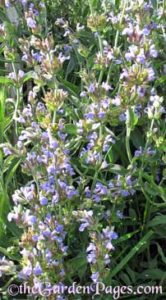
The sage herbs you cook with in the kitchen also a makes a delicious addition to dry gardens. Culinary Sage or salvia officinalis is native to the warm Mediterranean regions. They grow to a height of three feet tall and almost as wide. The stems are square and woody, usually covers with short hairs. All parts of this grayish green plant are aromatic. Salvia leaves are long and thin, up to 4 inches long and 1/2 inch across. They are crinkly, fragrant and sticky and can be used in cooking either fresh or dried. Sage grows in full sun to partial, dappled shade, and are hardy to about 20 degrees.
Sage plants flower in the summer with upright usually with blue or light blue flowers. They are beautiful in arrangements, or dried for kitchen decoration. Salvia can tolerate regular garden watering, but will also do well in drought conditions. After a few years they will need to be cut back to remove dead branches and maintain shape.
Sage can be grown in containers. The recommended size is at least an 8 inch pot, or larger. The smaller the pot, the faster plants can dry out, so it is advisable to water every week as long as the soil doesn’t become soggy.
Sage has a strong, earthy aroma. It adds flavor and depth to stews and soups. It mixes well with beef or chicken and makes green beans seem a little bit heartier. Pineapple sage is a close relative and adds a lighter flavor to food. It goes well with chicken. Fresh sage is great stuffed into chicken or turkey roasts and you can use the whole branch. Put an orange in there for a great flavor combo.
California White Sage (Salvia apiana)
This beautiful shrub is native to Southern California and Baja. It is usually found growing wild in the coastal sage scrub habitat on the western edges of the Mojave and Sonoran deserts. It grows five feet tall (at least) and 5 feet across.
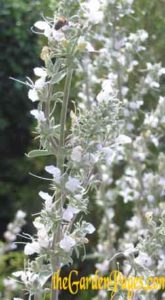
White Sage is also called Bee Sage; my camera was lucky enough to catch one on a flower. The leaves are up to 4 inches long, thick and velvety and are slightly sticky.
The whole plant is very aromatic so you should find a spot in your garden where you can enjoy its fragrance. The silvery plant seems to glow in the moonlight. The flowers are white, sometimes tinted purple and are produced in whorls on long branches up to three feet long.
White sage is considered sacred by Native Americans, like the Chumash, in the southwestern United States. The Peterson Field Guide To Western Medicinal Plants And Herbs describes it thus: “Considered an expectorant; used for colds, coughs, sore throats and systemic poison oak rashes.
An important ceremonial plant among southwestern Indian groups. The herb was burned as a fumigant after an illness in the dwelling and to cleanse sacred spaces.
Read more on my White Sage page….
Annual Sage (Salvia sp.)
Many annual sages are grown for quick color in the garden. One of the more common forms are red. Other colors can include pink, white and yellow. Most sages reseed in the garden, sending up new plants in the spring.
How to Dry Your Herbs
 The best time to pick sage for drying is just before it flowers, but any time of year will work. Be sure your branches are free from water or dew. To dry the herbs, tie them in a bunch and hang them upside down in a cool dry place to snip as needed.
Before modern medicine sage tea was gargled for sore throats and cold tea was drunk to stop sweating. Crushed fresh leaves were used on insect bites. The Romans used sage in religious rites and Native Americans recognize White Sage for blessing and cleansing.
Start a little kitchen garden either outdoors or on your windowsill. Good companion herb plants for sage are rosemary and thyme as they have similar water and sun requirements.