Drought Tolerant Shrubs, Trees and Other Plants for Quick Garden Privacy Screens or Hedges
Table of Contents
Many people are rediscovering the joys of taking ‘staycations’ by staying home and an “outdoor room” in your garden is a perfect places to relax and unwind. Screen plants can provide privacy in your garden, hide an unsightly area and provide shade as you plant your personal garden paradise.
In the dry, baking hot southwest it can be difficult to find screen plants that can handle our climate. I am starting an entire page dedicated to screen plants. They are all useful screening shrubs for creating walls to establish separate sections in a garden, so you can create different garden ‘rooms’ in your yard.
These shrubs or small trees are useful for screens, grow fast or are drought tolerant. Some plants have all three qualities!
Garden Privacy Screens For Southern California Landscapes
Hopseed Bush (Dodonaea viscosa)
USDA Zone: 9-11
Sunset Zone: 7-24
Sun: Full sun to part shade
Water: Moderate to low, drought tolerant
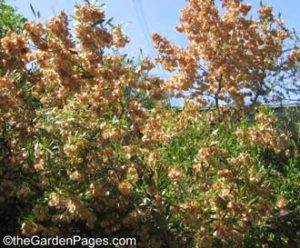
Hop Seed bushes come with leaves in either bright, lime green or dark purple. Both versions have leaves about 4 inches long and 1/2 inch wide and are very shiny on multiple shrubby branches. These drought tolerant shrubs are fast growers to about 10 feet tall and almost as wide. They take full sun to part shade. Once established in the garden (1-2 years) they can survive on rainfall alone.
Hopseed bushes have a growth habit that is a bit airy, with lots of small branches and the long leaves add to the lacy feel. They can be trimmed as hedges or espaliers for a slightly denser effect. These are good for layering to create a full, lush feel in the border. They are perfect for the back of the bed (where the sprinkler won’t reach), along fences or as border screens. In late spring they develop large, papery seed pods, usually light brown, which hang on for weeks and provide a dramatic effect. Although the seed pods break down quickly in the soil, I do not recommend planting these bushes near pools.
Brush Cherry, Carolina Laurel Cherry (Prunus caroliniana)
USDA Zone: 7 – 9
Sunset Zone: 5 – 24
Sun: Full sun to part shade
Water: Moderate to low
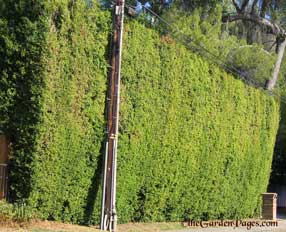
Brush Cherry is another dependable, versatile garden shrub for quick screens and hedges. These shrubs can grow up to 30 feet tall and 10 – 12 feet wide. Although I have seen mature stands of Carolina Laurel grow even taller.
They can grow in full sun to part shade. Once established they can survive drought conditions. However, in desert areas they prefer less sun and will appreciate more water during the hottest summer weather.
Brush Cherries have a dense growth habit with lots of branches so they take well to heaving shearing as a hedge and can even be used for topiaries. Left untrimmed, they will still maintain their neat, shrubby shape, but the interior growth will not have leaves. They can also be trained as small multi-trunk trees. New growth is a pretty reddish rusty color in the spring. They get sprays of white flowers followed by clusters of small, bright red cherries. The cherries can stain concrete and make a mess. If you don’t have enough birds in your area to take care of the cherries for you, just trim off the flowers before they set. This will also relieve the plant of the stress of producing seeds.
Italian Cypress (Cupressus sempervirens)
USDA Zone: 7 – 9
Sunset Zone: 4 – 24
Sun: Full sun to part shade
Water: Moderate to low, drought tolerant
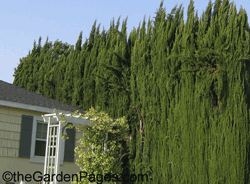
Italian Cypress trees are a familiar staple in the city, growing along border lines as tall screens. They grow up to 60 feet high on single trunks and are generally 1-2 feet wide but mature plants can be much wider. All cypresses prefer full sun, but will tolerate part shade and can survive on little water once they are established in a year or two.
Italian cypress are perfect shrubs for problem areas. They grow tall but they’re thin, so you can tuck them into narrow spaces. Their trunks will eventually reach about 12 inches around, so your narrow bed should at least be that wide. Their growth habit is sleek and cylindrical, with most of their leaves pointing up.
They lose a small amount of needles during they year, but litter is not a big problem with these trees. They do not grow very fast the first year, but they will make up for their lack of growth in the second year. Continually trimming the tops will result in a slightly fatter shrub, but they are fairly care free, needing no trimming.
When you are planning on having your shrubs survive on rainfall, it is best to encourage deep root development early on by soaking your plants every few days instead of sprinkling the topsoil every night. Even established plants appreciate a deep soak during a heat wave, when the weather has been over 100 degrees, or when it has been especially dry and windy.
Leyland Cypress Cupressocyparis Leylandii
USDA Zone: 6 – 10A
Sunset Zone: 38 – 24
Sun: Full sun
Water: Moderate to low, drought tolerant
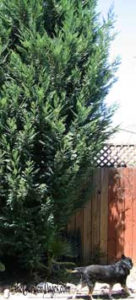
Leyland cypress (Cupressocyparis leylandii) is a very fast growing tree that grow tall and not so wide, making them perfect for screen plants. They are also drought tolerant once established and evergreen. These plants can grow four to five feet in one season. Their shape is similar to Italian Cypress, except much wider at the bottom. A mature tree can reach up to 60 feet tall and up to 10 feet around.
Best spacing for these plants is 10 feet apart. If you plant them too close together they become more susceptible to root rot because of the crowded conditions underground.
If you cannot wait until the shrubs grow together, put something in between them as a screen until they fill in. Use whisky barrels for portability. If you need a thinner plant that is still a fast grower and tall screen try Italian cypress.
Nandina or Heavenly Bamboo
USDA Zone: 7 – 9
Sunset Zone: 4 – 24
Sun: Sun to shade
Water: Moderate to low, drought tolerant
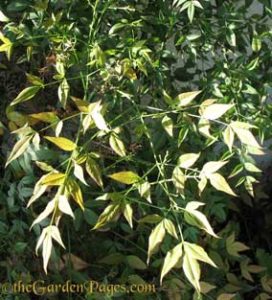
Heavenly Bamboo, or Nandina is a beautiful landscape shrub with leaves that seem to change color every day. It is a slow grower but it is worth the wait.
Nandina has low water requirements once established and even grows well in dry shade. In spring or early summer the shrubs flowers with creamy white blooms at the ends of the branches measuring 6 to 8 inches. If the flowers are pollinated they produce clusters of red berries in the fall.
It is useful as a low screen in the garden, reaching heights of 6 to 8 feet tall. Single plants usually measure two feet across, but they slowly form clumps, spreading by underground runners. Heavenly Bamboo isn’t a true bamboo at all but is a member of the barberry family.
All of these plants are growing happily in my heavy clay, alkaline soil in hot and sunny Southern California. Good luck and happy gardening!
Best Time to Plant Your Shrubberies
In mild winter areas the best time to plant almost anything is fall. You’ll get cooler weather and rain. This give your plant time to establish a good root system. You may see some growth on these transplants during winter and early spring.
When the weather warms up, my fall planted shrubs seem to explode with growth. Their established root system will be better able to support new growth and keep the plant healthy.
Once plants are established it is better to give them one good soak then a bunch of sprinkles on the soil surface every day. You want the water to soak all the way down to the roots. This also encourages your plant to develop deep roots to secure the plant and better survive drought.
Plants that seem like a good idea at the time – but are not!
Bamboo – Yes, they form a screen. They also form a grove wherever they are planted in the open ground. Bamboo is very invasive and almost impossible to eradicate. I’ve seen it growing up through asphalt! Never plant bamboo in the open ground, always use a container and make sure there is a barrier between the container and your soil so no roots escape.
Oleander – Another fast screen plant, but the sap is poisonous to humans and pets!