California and Western Native Plants
In Southern California the summers are hot and long. The rainy season is from November-ish to March but rainfall only averages about 7 inches a year.
This is Sunset zone 18, or USDA zone 10. In drought years we’ve had water rationing and prices keep going up. But the flowers in the canyons just keep blooming.
Drought tolerant does not mean you can only landscape with cactus and succulent plants (although visit my succulent page if you’re interested).
The other option is to go native. Or, at least mainly native. My garden has a few visitors from Australia and South Africa who also like my climate. Here are a few plants that have done well in my dry, heavy clay, alkaline soil.
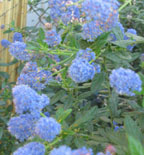 Ceanothus (Ceanothus spp.)
This perennial has the most beautiful deep blue blooms! Colors range from white/light blue to deep mystical blue.
They are evergreen and bloom during spring. They smell like Heaven. They reach 4 to 6 feet tall and as wide. After they’re established they can live off rainfall. Normally we get 6-10 inches a year.
These are native to California and turn the canyons blue in the spring. This baby loves my heavy clay, alkaline soil and grows fast. Don’t over water or they’ll die.
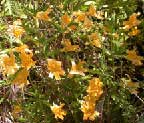 Monkey Flower (Mimulus spp.)
Perennial with flowers ranging from white to red. Most common are orange. Driving through the canyons I used to see these big, bright orange blooms hanging down the steep canyon walls. “What the heck IS that?” They grow about 2 feet tall wide. In the hot, interior valleys (where I am) they like to have a little bit of shade.
Flower colors range from white, cream, yellow through orange. In the Winter (Fall for you East Coasters), they benefit from a light trimming.
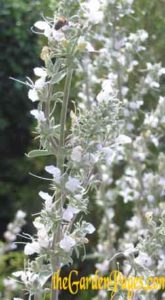 California White Sage (Salvia apiana)
This beautiful shrub is native to Southern California and Baja. It is usually found growing wild in the coastal sage scrub habitat on the western edges of the Mojave and Sonoran deserts. It grows five feet tall (at least) and 5 feet across.
White Sage is also called Bee Sage; my camera was lucky enough to catch one on a flower. The leaves are up to 4 inches long, thick and velvety and are slightly sticky. The whole plant is very aromatic so you should find a spot in your garden where you can enjoy its fragrance.
White sage is considered sacred by Native Americans, like the Chumash, in the southwestern United States. The Peterson Field Guide To Western Medicinal Plants And Herbs describes it thus: “Considered an expectorant; used for colds, coughs, sore throats and systemic poison oak rashes. An important ceremonial plant among southwestern Indian groups. The herb was burned as a fumigant after an illness in the dwelling”.
The silvery plant seems to glow in the moonlight. The flowers are white, sometimes tinted purple and are produced in whorls on long branches up to three feet long.
 Garden Herb Sage (Salvia Officinalis)
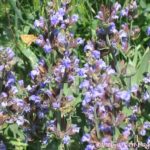
This is culinary sage, but all types do well here. They are fairly drought resistant and don’t mind the heat.
Sage likes full sun to part shade and grows up to 2 feet tall and wide here, with beautiful blue blooms in the Spring.
Fresh sage is great for stuffing into chicken or turkey roasts. Just break off a small branch and put it in before the stuffing. Add an orange for a great flavor combo. Read more about growing drought tolerant sage plants on my Growing Sage Plants Page…
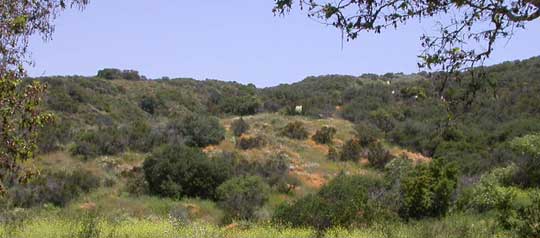 Part of the Marvin Braude Mulholland Gateway Park The tiny white dots on the hillsides are blooming Yucca.
Wildflower and Native Plant InspirationThe best places for garden inspiration is outdoors. Take a drive through the canyons to see what’s blooming. Go hiking, go to a nature center or try a local gardening club. Find out if your state has a native plant society and look to them for ideas and suggestions. Develop a relationship with your local nursery and ask them to stock more native plants. They may also be more knowledgeable about your local climate and should be able to suggest native plants that will grow well in your garden. My favorite Southern California Nursery is called West Valley Nursery in Tarzana. They have a great selection of natives and drought tolerant flowers and shrubs. They’re also happy to order odd plants for me. Try getting help like that at the Super Depot! |
More Drought Tolerant Plant Pages:
Purple Flowering Wisteria Vines
Toyon or California Christmas Holly Berry
Pomegranate Trees and Pests
Flowering Kalanchoe Plant Care
Drought-Tolerant Desert Willow or Chilopsis Care